

Dr. Jyoti
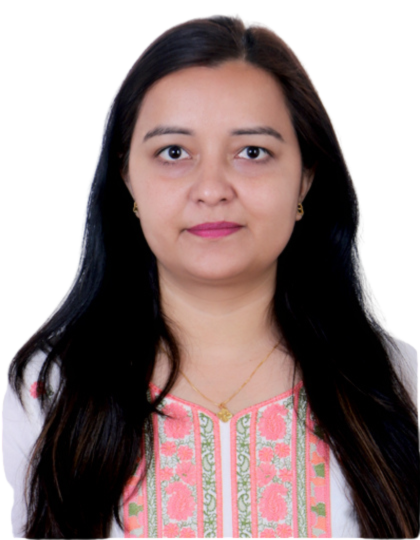
- Dr. Jyoti
- Scientist - C
- jyoti.niist@csir.res.in
- +919958773709
Academic Qualification
Academic Qualification
- Doctor of Philosophy in Biological Sciences (2022)
CSIR-Institute of Genomics and Integrative Biology (IGIB), New Delhi, India
Thesis title “Understanding the role of endoplasmic reticulum (ER) and mitochondrial calcium signaling in pigmentation”
AcSIR Best Thesis Award in Biological Sciences 2022. - Bachelor of Technology in Biotechnology, (2015)
Amity University Haryana, India
First Division with Distinction
Professional Experience
Professional Experience
- Scientist - C (April 2026 - Present),
Biosciences and Bioengineering Division
CSIR- National Institute for Interdisciplinary Science and Technology (NIIST)Thiruvananthapuram, Kerala - INSPIRE Faculty Fellow (July 2023 - March 2026),
Regional Centre for Biotechnology, Faridabad, Haryana - Post Doctoral Fellow (June 2022 - June 2023),
Regional Centre for Biotechnology, Faridabad, Haryana
Research Interest
Research Interest
- Investigating organellar calcium (Ca²⁺) dynamics, with a focus on endoplasmic reticulum (ER)-mitochondrial Ca²⁺ signaling in cancer biology.
- Elucidating the functional role of mitochondrial Ca²⁺ signaling in tumorigenesis and metastasis.
Research Areas
Research Areas
Our lab investigates how intracellular Ca²⁺ signaling networks are rewired in cancer, with a particular emphasis on endoplasmic reticulum (ER)-mitochondrial crosstalk. We aim to understand how mitochondrial Ca²⁺ flux regulates key cellular processes that drive tumor progression.A major goal of our research is to delineate how dysregulated Ca²⁺ signaling contributes to therapy resistance. By integrating cellular, molecular, and functional approaches, we aim to uncover novel regulatory mechanisms underlying cancer progression and identify potential therapeutic targets.
Achievements & Awards
Awards/Fellowships
- Merck Young Scientist Award 2025 (Emerging Talent - Biological Sciences) - Runner Up
- EMBO special travel grant 2025.
- ICMR-International travel grant 2025, 2024.
- DST- INSPIRE Faculty Award (2023-2028).
- European Calcium Society (ECS) travel fellowship 2024.
- SERB- International Travel Support (ITS)- grant 2024.
- AcSIR Best Thesis Award in Biological Sciences 2022.
- EMBO travel grant 2020.
- Silver Medal for Second Rank in Academic Performance in B.Tech (2011-2015).
- Dr. Ashok K Chauhan 100% Scholarship Award in B.Tech (2011-2015).
- District topper in 12 th standard exam (2011)
Projects
Projects
- July 2023 - July 2028 DST INSPIRE Faculty award (Rs 35 Lakhs)
Publications
Publications
- Tanwar J, Ahuja K, Sharma A, Sehgal P, Ranjan G, Sultan F, Agrawal A, D'Angelo D, Priya A, Yenamandra VK, Singh A, Raffaello A, Madesh M, Rizzuto R, Sivasubbu S, Motiani RK (2024). Mitochondrial calcium uptake orchestrates vertebrate pigmentation via transcriptional regulation of keratin filaments. PLoS Biology 2024 Nov 11;22(11):e3002895. doi: 10.1371/journal.pbio.3002895.
Impact Factor: 7.8 - Tanwar J, Sharma A, Saurav S, Shyamveer, Jatana N and Motiani RK (2022). MITF is a novel transcriptional regulator of the calcium sensor STIM1: significance in physiological melanogenesis. Journal of Biological Chemistry 2022 Nov 7:102681.
Impact Factor: 4.8 - Sultan F, Basu R, Murthy D, Kochar M, Attri KS, Aggarwal A, Kumari P, Dnyane P, Tanwar J, Motiani RK, Singh A, Gadgil C, Bhavesh NS, Singh PK, Natarajan VT, Gokhale RS (2022). Temporal analysis of melanogenesis identifies fatty acid metabolism as key skin pigment regulator. PLoS Biology 2022 May 18;20(5):e3001634.
Impact Factor: 9.8 - Tanwar J, Saurav S, Basu R, Singh JB, Priya A, Dutta M, Santhanam U, Joshi M, Madison S, Singh A, Nair N, Gokhale RS and Motiani RK (2022). Mitofusin-2 negatively regulates melanogenesis by modulating Mitochondrial ROS generation. Cells 2022 Feb 16;11(4):701.
Impact Factor: 6 - Arora S, Tanwar J, Sharma N, Saurav S and Motiani RK (2021). Orai3 regulates pancreatic cancer metastasis by encoding a functional store operated calcium entry channel. Cancers 2021 Nov 25;13(23):5937.
Impact Factor: 6.63 - Saurav S#, Tanwar J#, Ahuja K and Motiani RK (2021). Dysregulation of host cell calcium signaling during viral infections: Emerging paradigm with high clinical relevance. Mol Aspects Med 2021 Oct., 81:101004.
#Co-first author
Impact Factor: 16.3 - Sehgal P, Mathew S, Sivadas A, Ray A, Tanwar J, Vishwakarma S, Rajan G, Shamsudheen KV, Bhoyar RC, Pateria A, Leonard E, Lalwani M, Vats A, Pappuru RR, Tyagi M, Jakati S, Sengupta S, Binukumar BK, Chakrabarti S, Kaur I, Motiani RK, Scaria V and Sivasubbu S (2021). LncRNA VEAL2 regulates PRKCB2 to modulate endothelial permeability in diabetic retinopathy. EMBO J. 2021 Aug 2; 40(15):e107134.
Impact Factor: 14 - Tanwar J, Singh JB and Motiani RK (2021). Molecular machinery regulating mitochondrial calcium levels: The nuts and bolts of mitochondrial calcium dynamics. Mitochondrion. 2021 Mar, 57: 9-22.
Impact Factor: 4.5 - Tanwar J, Arora S and Motiani RK (2020) Orai3: Oncochannel with therapeutic potential. Cell Calcium. 2020 Sep; 90:102247.
Impact Factor: 6.8 - Raja DA, Subramaniam Y, Aggarwal A, Gotherwal V, Babu A, Tanwar J, Motiani RK, Sivasubbu S, Gokhale RS and Natarajan VT (2020). Histone Variant Dictates Fate Biasing of Neural Crest Cells to Melanocyte Lineage. Development. 2020 Mar 12;147(5):dev182576.
Impact Factor: 6.8 - Motiani RK, Tanwar J, Raja DA, Vashisht A, Khanna S, Sharma S, Srivastava S, Sivasubbu S, Natarajan VT and Gokhale RS# (2018). STIM1 activation of adenylyl cyclase 6 connects Ca2+ and cAMP signaling during melanogenesis. EMBO Journal. 2018 Mar 1;37(5)
Impact Factor: 11.2 - Tanwar J and Motiani RK (2018). Role of SOCE architects STIM and Orai proteins in Cell Death. Cell Calcium 2018 Jan; 69:19-27.
Impact Factor: 4 - Vashisht# A, Tanwar J# and Motiani RK (2018). Regulation of proto-oncogene Orai3 by miR18a/b and miR34a. Cell Calcium 2018 Nov; 75:101-111.
#Co-first author
Impact Factor: 4 - Tanwar J, Trebak M and Motiani RK (2017). Role of STIM and Orai proteins in Vascular Disorders. Adv Exp Med Biol. 2017; 993:425-452.
Impact Factor: 1.7 - Tanwar J, Das S, Fatima Z, Hameed S. Multidrug resistance: an emerging crisis. Interdiscip Perspect Infect Dis. 2014;2014:541340. doi: 10.1155/2014/541340. Epub 2014 Jul 16
Impact Factor: 1.86
Conference Presentations
Conferences
- Jyoti Tanwar et al. “Mitochondrial calcium is a critical determinant of vertebrate pigmentation via transcriptional regulation of keratin filaments”, presented at EMBO Workshop on Membrane Contact Sites: Methodology, Biology Pathology from 28 September - 3 October 2025 in Monopoli (BA), Italy.
- Jyoti Tanwar et al. “Mitochondrial calcium is a critical determinant of vertebrate pigmentation via transcriptional regulation of keratin filaments”, presented at 17th Young Investigators Meeting 2025, March 2025, Courtyard by Marriott, Agra.
- Jyoti Tanwar et al. “Mitochondrial calcium is a critical determinant of vertebrate pigmentation via transcriptional regulation of keratin filaments”, presented at 47 th All India Cell Biology conference International Symposium, December 2024, National Institute of Science Education and Research, Bhubaneswar.
- Jyoti Tanwar et al. “Mitochondrial calcium is a critical determinant of vertebrate pigmentation via transcriptional regulation of keratin filaments”, presented at 17th International meeting of the European Calcium Society (ECS) September 2024,Homerton College, Cambridge, United Kingdom (UK).
- Jyoti Tanwar et al. “Role of Mitochondrial Calcium Uniporter (MCU) complex in pigmentation”, presented at EMBO Symposium on Calcium Signaling: Molecular mechanisms to role in health and diseases January 2020, NCBS, Bangalore.
- Jyoti Tanwar et al. “Calciomics of Skin Pigmentation”, presented at the International Conference on Calcium Signaling February 2020, RCB, Faridabad.
- Rajender K. Motiani, Jyoti Tanwar et al. “Noncanonical STIM1 signaling regulates pigmentation independent of Orais via ADCYC6”, presented at the International Conference on Genomic Medicine in Skin Research June 2016, CSIR-IGIB, Delhi.