

Dr.Villayat Ali
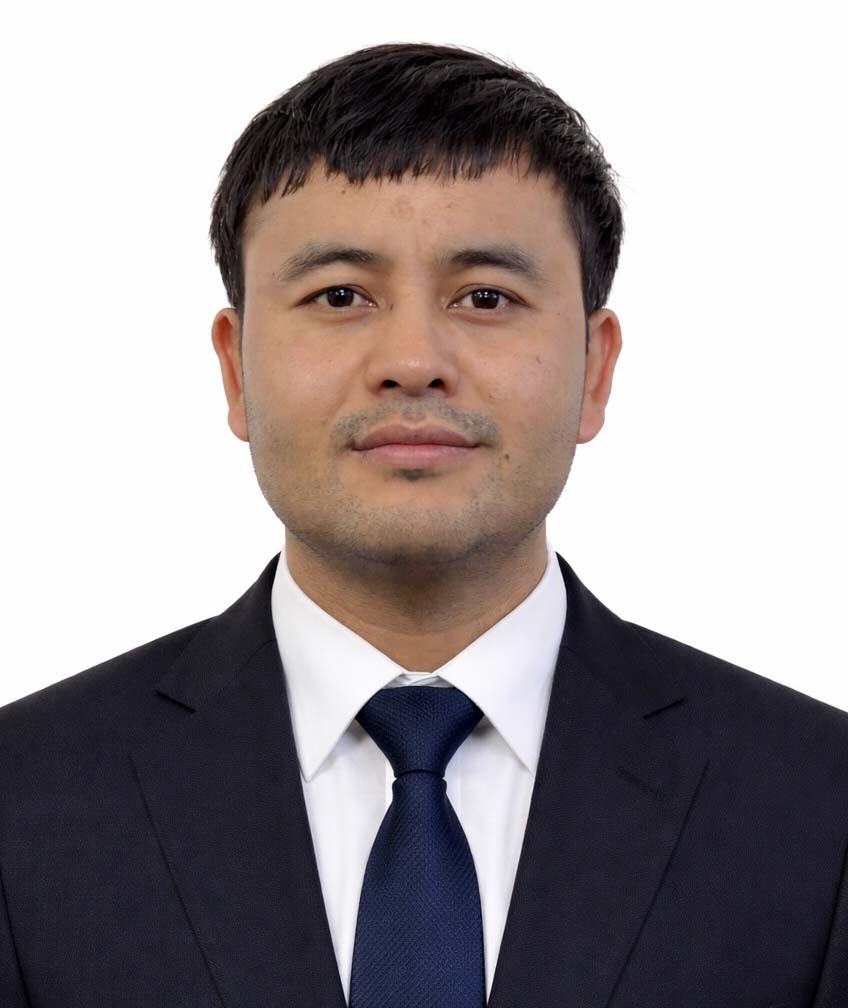
- Dr.Villayat Ali
- Scientist - C
- villayatali.niist@csir.res.in
- +917006137252
Dr Villayat Ali was born and raised in a small village of Kargil District of Union Territory of Ladakh. He has done his PhD in plant biological sciences from CSIR-IIIM Jammu under the supervision of Dr Dhiraj Vyas in the year 2022. During his doctoral studies, he made a detailed study on the “glucosinolate- myrosinase” system of an ecologically important plant, Lepidium latifolium L. from Ladakh Himalayas. In order to harness its nutraceutical and adaptive potential, Dr Ali assessed the total metabolome using GC-MS and LC-MS analysis to understand the important phytochemicals and their metabolic reconfiguration. Owing to the presence of large quantity of health-promoting “glucosinolates”, he has made a significant contribution in identifying the sprouts as the perfect stage which is having unique combination of 2-propeny and benzyl-glucosinolates followed by qualitative and quantitative phytochemical superiority. His work highlights L.latifolium as a climate resilient phytofood with potential for biofortification and functional food particularly in high-altitude ecosystem of Ladakh. His work for the first time demonstrated a significant trade-off between primary and secondary metabolism and suggested the role of LlSLIM1 transcription factor in the regulation of glucosinolate metabolism and photoprotection mechanism of L.latifolium. Apart from his PhD work, he has contributed on studies associated with stress physiology and ecology where temperature as well as light mitigation strategies in L.latifolium was studied. Further, he also worked on the metabolomics of Cannabis sativa and published the first report on its nutraceutical potential. During his post-PhD research at CSIR-IIIM, Dr Ali made the mechanistic study on the molecular regulation of non-photochemical quenching (NPQ) in Lepidium latifolium where he identified a novel role of LlSLIM1 transcription factor in the regulation of violaxanthin de-epoxidase mediated Xanthophyll cycle to circumvent photo-oxidative damage during high light intensity. Currently, he is working as Scientist-C in Centre of Excellence in Ayurveda Research (CEAR) at CSIR-NIIST.
- PhD Biological Sciences : CSIR-Indian Institute of Integrative Medicine, Jammu (2016 -2022)
Thesis: “Biochemical and molecular studies to understand glucosinolate metabolism in Lepidium latifolium L.”
- MSc in Botany : Jiwaji University Gwalior, M.P (2012 -2014)
- B.Sc (Chemistry, Botany, Zoology) : University of Kashmir, Srinagar (2009 -2011)
My research interest is to understand the regulation of secondary metabolism in plants used in Indian traditional system of medicine particularly in Ayurveda. Since secondary metabolites act as a key source for any pharmaceutical or nutraceutical leads, it becomes important to characterize and identify the novel compounds using various high through-put analytical tools and techniques. Therefore, integrating metabolomics and transcriptomics along with biochemical and molecular biology approach certainly help in understanding the intricate metabolic pathways involved in the regulation of plant secondary metabolism. Followings are the key areas which I would like to focus on:
- Metabolomic studies of important medicinal plants used in Ayurveda
- Characterization, identification and biofortification of desirable bioactives/phytochemicals
- Development of plant based nutraceuticals using advanced analytical tools
- Identification of key genes and regulatory factors involved in biosynthesis of phytochemicals such as Phenolics, terpenoids, alkaloids, sulfur-containing constituents etc and their application to the production of useful bioactives
- Understanding the regulation and mechanisms underlying the wide variety of plant production functions, using Arabidopsis thaliana as a model.
- Scientist - Mar 2026 to present , Center of excellence in Ayurveda Research (CEAR) , CSIR- National Institute for Interdisciplinary Science and Technology, Thiruvanthapuram Kerala
- Project Scientist - Aug 2024 to Feb 2026 ,Plant Sciences Division, CSIR- Indian Institute of Integrative Medicine, Jammu
- Senior Project Associate - May 2023 to Aug 2024 , Plant Sciences Division,CSIR- Indian Institute of Integrative Medicine, Jammu
- Awarded CSIR-Senior Research Fellowship from 2019-2021
- Awarded CSIR-Junior Research Fellowship from 2016-2018
- Qualified CSIR-National level Eligibility Test (CSIR-JRF/NET) thrice in Life science (June 2015, Dec 2015 and June 2016).
- Qualified Jammu & Kashmir State Eligibility Test (JKSET) in Life science (2016)
Conferences and Workshop
- Ali, V., Vyas, D. Metabolic trade-off suggests glucosinolates as key compound for adaptation of Lepidium latifolium in the trans-Himalayan region of Ladakh. (6th International Conference on Plant Physiology held on ICAR-TNAU, Coimbatore from Dec 15 – 18, 2025)
- Ali, V., Bhat, R., Khajuria, M., Surmal, O., Rashid, A., Faiz, S., Vyas, D. (2018) “Lepidium latifolium L. sprouts as a novel nutraceutical source.” (4th International Plant Physiology Congress held on CSIR-NBRI, Lucknow from Dec 2 – 5, 2018)
- 4th Plant Proteomics Workshop entitled “Seabuckthorn- Genomics, Proteomics & Metabolomics” at Department of Botany, University of Delhi (23-27th dec, 2019)
- Workshop on bio-statistics organized by Department of Statistics, University of Jammu, India (10- 14th sep, 2018)
- Workshop on ethno-botanical studies organized by Department of Botany, Jiwaji University Gwalior, India
- . Villayat Ali & Dhiraj Vyas. (2025). A Transplantation Study in the High-Altitude Ecosystem of Ladakh suggests Site-specific Microenvironment is Key for Physiological Adaptation than Altitude. Plant Physiology and Biochemistry, 109532. DOI: https://doi.org/10.1016/j.plaphy.2025.109532 IF (6.1)
- . Villayat Ali, Takeru Yoshimoto, Dhiraj Vyas & Akiko Maruyama-Nakashita. (2025). Impacts of Sulfur on Glucosinolate Metabolism: From Arabidopsis to Wild Brassicales. Plants, 14(14), 2129. DOI: https://doi.org/10.3390/plants14142129 IF (4.1)
- . Aatif Rashid, Charu Thakur, Villayat Ali, Sheenam Faiz, Shafali Bhasin, Sumit Jamwal & Dhiraj Vyas. (2025). Targeted Metabolomics Reveals Metabolic Flux and Regulatory Mechanisms Underlying Cannabinoid and Terpene Biosynthesis in Cannabis Accessions. Plant Physiology and Biochemistry, 110679. DOI: https://doi.org/10.1016/j.plaphy.2025.110679 IF (6.1)
- . Villayat Ali, Sheenam Faiz, Sumit Jamwal, Diksha Bhagnyal, Shafali Bhasin, Aartif Rashid & Dhiraj Vyas. (2024). Sulfate and chloride ion differentially affect sulfur and glucosinolate metabolism in Lepidium latifolium L. Food Bioscience, 105034. DOI: https://doi.org/10.1016/j.fbio.2024.105034 IF (5.9)
- . Villayat Ali, Jhuma Mandal & Dhiraj Vyas. (2024). Insignts into light-driven dynamics of phytochemicals in sprouts and microgreens. Plant Growth Regulation, https://doi.org/10.1007/s10725-024-01240-z IF (3.9)
- . Villayat Ali, Aatif Rashid, Dinesh Kumar & Dhiraj Vyas. (2023). Stage-specific metabolomics suggests a trade-off between primary and secondary metabolites for nutritional advantage in Lepidium latifolium L. Food Chemistry, 419, 136035. DOI: http://doi.org/10.1016/j.foodchem.2023.136035 IF (9.8)
- Aatif Rashid, Manu Khajuria, Villayat Ali, Sheenam Faiz, Sumit Jamwal & Dhiraj Vyas. (2023). Genome-wide identification and expression profiling of WRKY family suggest their potential role in cannabinoid regulation in Cannabis sativa L. Industrial Crops and Products, 206, 117706. DOI: https://doi.org/10.1016/j.indcrop.2023.117706 IF (5.9)
- . Villayat Ali, Manu Khajuria, Rohini Bhat, Aatif Rashid, Sheenam Faiz & Dhiraj Vyas. (2021). Comparative phytochemical analysis of Lepidium latifolium L. sprouts from Ladakh Himalayas suggest a novel combination of 2-propenyl and benzyl glucosinolate. LWT, 138, 110713. DOI: http://doi.org/10.1016/j.lwt.2020.110713 IF (6.6)
- Aatif Rashid*, Villayat Ali*, Manu Khajuria, Sheenam Faiz, Sumeet Gairola & Dhiraj Vyas. (2021). GC–MS based metabolomic approach to understand nutraceutical potential of Cannabis seeds from two different environments. Food Chemistry, 339, 128076. DOI: http://doi.org/10.1016/j.foodchem.2020.128076 IF (9.8)
- Rohini Bhat*, Sheenam Faiz*, Villayat Ali, Manu Khajuria, Debaraj Mukherjee & Dhiraj Vyas. (2021). Effect of temperature and insect herbivory on the regulation of glucosinolate‐myrosinase system in Lepidium latifolium. Physiologia Plantarum, 172(1), 53-63. DOI: http://doi.org/10.1111/ppl.13289 IF (6.4)
- . Manu Khajuria, Sumit Jamwal, Villayat Ali, Aatif Rashid, A., Faiz, S., & Vyas, D. (2021).Temperature mitigation strategies in Lepidium latifolium L., a sleeper weed from Ladakh himalayas. Environmental and Experimental Botany, 184, 104352. DOI: http://doi.org/10.1016/j.envexpbot.2020.104352 IF (5.7)
- Anil Sharma, Madhu Bhagat, Mohammad Urfan, Bilal Ahmed, Anima Langer, Villayat Ali, ... & Sikander Pal. (2021). Nickel excess affects phenology and reproductive attributes of Asterella wallichiana and Plagiochasma appendiculatum growing in natural habitats. Scientific Reports,11(1), 3369. DOI: http://doi.org/10.1038/s41598-020-73441-1 IF (4.9)
- Pooja Choudhary, Sanjay Guleria, Neha Sharma, K.H. Salaria, Rashmi Chalotra, Villayat Ali & Dhiraj Vyas. (2021). Comparative phenolic content and antioxidant activity of some medicinal plant extracts prepared by choline chloride based green solvents and methanol. Current Research in Green and Sustainable Chemistry, 4, 100224. DOI: http://doi.org/10.1016/j.crgsc.2021.100224 IF (0.0)
- . Aatif Rashid*, Villayat Ali*, Manu Khajuria, Sheenam Faiz, Sumit Jamwal, Javaid Fayaz Lone & Dhiraj Vyas. (2020). Antioxidant analysis in seeds of four different accessions of Cannabis sativa L. from Jammu. Res Rev Biotechnol Biosci, 7, 1-10. DOI: http://doi.org/10.5281/zenodo.3727367. IF (0.0)