

Upcycling Fruit Waste into Poly-γ-Glutamic Acid: A Green Alternative for Eco-Friendly Packaging and Sanitary Products
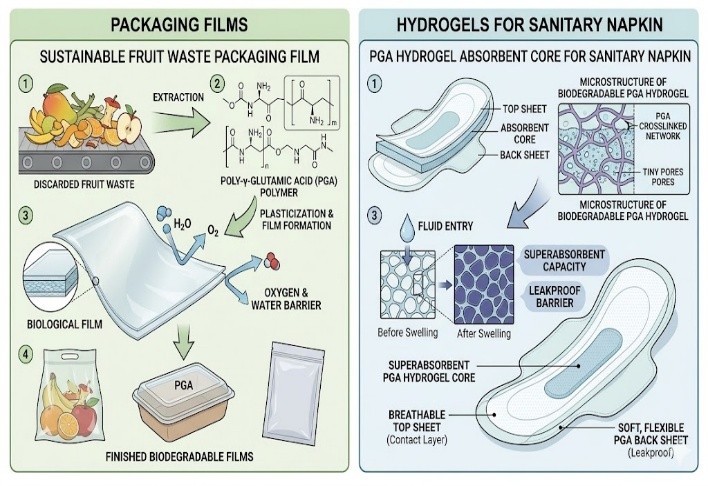
Sustainable production and application of Poly-γ-glutamic acid (γ-PGA), a naturally occurring, biodegradable, water-soluble biopolymer with significant industrial potential. The research focuses on producing γ-PGA using Bacillus species through submerged fermentation while exploring fruit processing wastes as low-cost carbon sources. Agro-industrial residues are pretreated using dilute acid followed by enzymatic hydrolysis to release fermentable sugars that can support microbial growth and biopolymer synthesis.
The produced γ-PGA is further characterized using analytical techniques such as NMR, FTIR, and HPLC to confirm its structural and chemical properties. Beyond production, the work also investigates value-added applications of γ-PGA in developing sustainable materials. These include the fabrication of biodegradable packaging films for food preservation and the preparation of superabsorbent hydrogels for sanitary and hygiene applications. This research highlights an integrated approach that combines waste valorization, microbial biopolymer production, and the development of eco-friendly materials with practical industrial applications.
- Research Area :Chemical Sciences & Technology Division (CSTD)